Threadripper 9000 (Zen 5): AMD’s 96-Core Workstation Powerhouse
As of April 2026, AMD’s long-anticipated high-end desktop refresh is finally coming into focus. The Threadripper 9000 series, codenamed Shimada Peak, is transitioning from early leaks to near-market availability—filling the last major gap in AMD’s Zen 5 portfolio.
Rather than chasing higher core counts, this generation focuses on efficiency, IPC gains, and compute density, redefining what a workstation CPU can deliver.
⚙️ Zen 5 “Shimada Peak”: Architecture First #
The Threadripper 9000 lineup is built on AMD’s Zen 5 architecture, emphasizing per-core performance improvements over brute-force scaling.
Key Specifications #
- Up to 96 cores / 192 threads
- 12 CCDs (Core Complex Dies)
- 384MB total L3 cache
- Advanced chiplet-based design
What Actually Improved? #
- ~10–15% IPC uplift over Zen 4
- Enhanced AVX-512 throughput (true 512-bit execution)
- Better scheduling and instruction handling
This shift matters because:
Modern workloads are increasingly latency and instruction bound, not just core-count limited.
🔮 Cache Hierarchy: Scaling Data Proximity #
Each Zen 5 CCD includes:
- 32MB L3 cache per CCD
- Totaling 384MB L3 on the 96-core SKU
This large shared cache pool:
- Reduces memory latency
- Improves multi-thread scaling
- Benefits simulation and compilation workloads
🧩 Entry-Level Strategy: Bandwidth Over Cores #
Interestingly, leaks show a 16-core variant in the lineup.
Why does this matter?
- Targets users needing:
- Massive PCIe bandwidth
- High memory capacity
- Not necessarily extreme parallel compute
This positions Threadripper as:
A platform-first solution, not just a CPU tier.
🔌 Platform Compatibility: TRX50 & WRX90 #
One of the most practical advantages of this generation is platform continuity.
Socket: sTR5 (Unchanged) #
Threadripper 9000 is expected to support existing boards:
TRX50 (HEDT) #
- 4-channel DDR5
- Up to 92 PCIe lanes (80 usable)
- Ideal for prosumers and creators
WRX90 (Workstation) #
- 8-channel DDR5
- Up to 148 PCIe lanes (128 usable)
- Enterprise features:
- Remote management
- ECC support
- Multi-GPU scalability
Power Considerations #
- TDP: ~350W
- Requires:
- High-end air cooling or
- 360mm+ liquid cooling
Sustained workloads (rendering, simulation) will push thermal limits.
🚀 The X3D Wildcard: 1GB Cache Potential? #
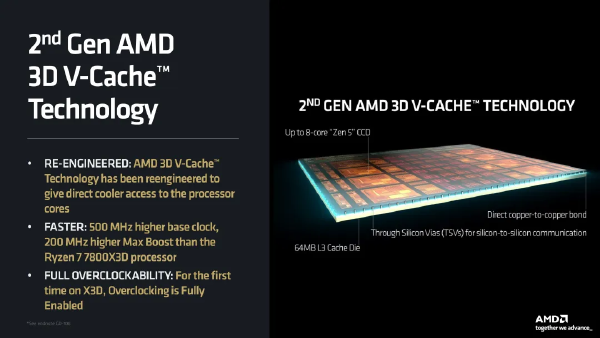
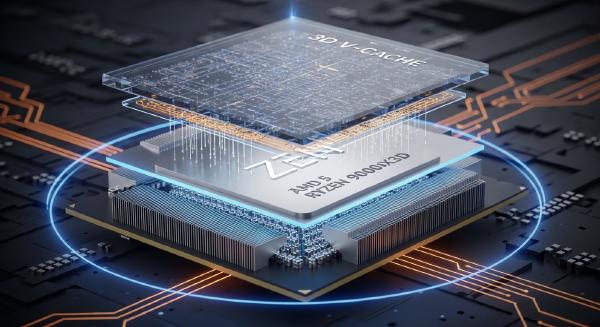
One of the most intriguing rumors is the addition of 3D V-Cache to Threadripper.
What Could Change? #
- Vertical cache stacking
- Total cache exceeding 1GB on high-end SKUs
Target Workloads #
- CFD (Computational Fluid Dynamics)
- EDA (Electronic Design Automation)
- Large-scale compilation
- Scientific simulations
These workloads benefit more from:
Data locality than clock speed
If confirmed, this could make Threadripper:
- Not just powerful
- But uniquely optimized for data-heavy computation
📊 Threadripper 7000 vs 9000 #
| Feature | Threadripper 7000 (Zen 4) | Threadripper 9000 (Zen 5) |
|---|---|---|
| Max Cores | 96 | 96 |
| Architecture | Zen 4 (5nm/6nm) | Zen 5 (4nm/6nm) |
| IPC | Baseline | +10–15% |
| Memory | DDR5-5200+ | DDR5-6000+ (est.) |
| PCIe | Gen 5 | Gen 5 |
| AVX-512 | Partial | Full 512-bit path |
🔮 Final Take: A Workstation-Class Supercomputer #
Threadripper 9000 isn’t about headline specs—it’s about real-world throughput.
It’s designed for users who need to:
- Run local AI models
- Compile massive codebases
- Render complex scenes
- Simulate real-world physics
The Big Shift #
With Zen 5:
- AVX-512 becomes practical at scale
- Cache becomes a primary performance lever
- Workstations begin to resemble mini supercomputers
For most users, 96 cores is still overkill.
But for professionals in AI, VFX, and engineering:
It’s not overkill—it’s finally enough.