Can Marvell Become the Next Broadcom in the AI Semiconductor Era?
The AI semiconductor industry is entering a new phase. While NVIDIA continues to dominate the GPU market, the next wave of value creation is increasingly shifting toward the infrastructure layers that enable large-scale AI deployments. Custom accelerators, optical interconnects, networking silicon, and advanced packaging technologies are becoming critical components of modern AI data centers.
Within this transition, Marvell has emerged as one of the companies most frequently compared to Broadcom. Both firms are deeply involved in the foundational technologies that power hyperscale AI infrastructure, and both are positioned to benefit from the growing demand for custom silicon and high-performance networking.
However, while Marvell shares several strategic similarities with Broadcom, significant differences remain. Understanding these similarities and gaps is essential for evaluating whether Marvell can become one of the defining semiconductor winners of the AI era.
🚀 AI Infrastructure Is Reshaping Semiconductor Valuations #
For much of the past decade, semiconductor growth was largely driven by consumer devices, smartphones, PCs, and cloud computing. The AI boom has fundamentally altered that equation.
Today, investors increasingly focus on companies that provide the infrastructure required to build and scale AI systems. As AI clusters grow from thousands to hundreds of thousands of accelerators, networking and interconnect technologies become just as important as compute performance.
This shift has expanded industry opportunities beyond GPU vendors and created new growth engines in areas such as:
- Custom AI accelerators (ASICs)
- Optical interconnects
- Data center switching
- Silicon photonics
- Advanced packaging
- High-speed SerDes technologies
Marvell sits at the intersection of several of these high-growth categories.
📊 Marvell’s Business Transformation #
Marvell has undergone a dramatic transformation over the past several years.
Historically, the company operated across multiple semiconductor segments, including storage, networking, enterprise infrastructure, and telecommunications. Today, its business is increasingly centered around AI data centers.
According to recent financial disclosures:
- Q1 FY2027 revenue reached approximately $2.42 billion
- Revenue grew 28% year-over-year
- Data center revenue reached roughly $1.83 billion
- Data center products now account for more than 75% of total revenue
This evolution has effectively repositioned Marvell as an AI infrastructure company rather than a diversified semiconductor vendor.
The growing concentration around AI-related products is one of the primary reasons investors increasingly compare Marvell to Broadcom.
🏢 Why Broadcom Is the Benchmark #
Broadcom has become one of the most successful infrastructure suppliers in the AI ecosystem.
Its AI business rests on three powerful pillars:
- Custom AI accelerators
- Data center networking
- Enterprise software
The software component is particularly important. Following its acquisition of VMware, Broadcom established a recurring, high-margin revenue stream that complements its semiconductor operations.
Recent results illustrate the scale of Broadcom’s AI momentum:
- Q1 FY2026 AI revenue reached approximately $8.4 billion
- AI revenue grew over 100% year-over-year
- Management expects continued rapid expansion
Broadcom’s combination of silicon leadership and software monetization has created a highly resilient business model that many investors view as the gold standard for AI infrastructure companies.
🔧 Marvell’s Three Core Growth Engines #
Marvell’s competitive positioning is built around three primary technology areas.
Custom AI Silicon #
The first growth driver is custom silicon.
As hyperscalers seek alternatives to off-the-shelf GPUs, many are developing proprietary AI accelerators tailored to their specific workloads.
Examples across the industry include:
- Internal AI chips
- Domain-specific accelerators
- Inference-focused processors
- Custom cloud infrastructure silicon
Marvell has established itself as a leading design partner for these projects.
Management expects its custom silicon business to exceed $10 billion in annual revenue by FY2029, highlighting the scale of the opportunity.
If Marvell continues securing design wins from major cloud providers, it will become increasingly embedded within next-generation AI infrastructure roadmaps.
Optical Interconnects #
The second growth engine is optical connectivity.
As AI clusters scale, networking increasingly becomes a performance bottleneck.
Moving data between thousands of accelerators requires:
- Higher bandwidth
- Lower latency
- Improved power efficiency
Marvell has built one of the industry’s most comprehensive portfolios in this area, including:
- 1.6T optical DSPs
- High-speed SerDes solutions
- Optical networking components
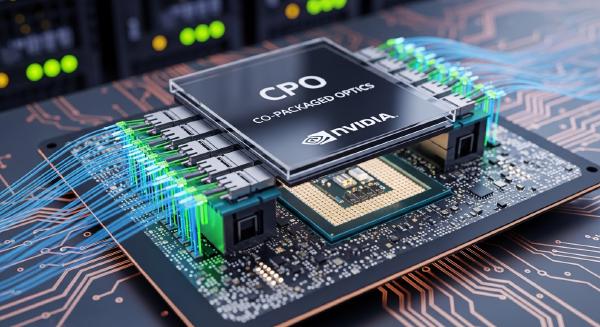
- Silicon photonics technologies
These products place Marvell closer to the core infrastructure layer than many traditional optical module suppliers.
Data Center Networking #
The third pillar is networking silicon.
Marvell’s networking portfolio includes:
- Teralynx switch silicon
- Ethernet solutions
- High-performance interconnect technologies
- AI fabric architectures
These products help enable communication across increasingly large AI clusters.
As networking bandwidth requirements continue growing, this segment is expected to remain a major source of future expansion.
🌐 The Strategic Importance of Celestial AI #
One of Marvell’s most significant strategic moves was its acquisition of Celestial AI technology assets.
The transaction strengthened Marvell’s position in silicon photonics and advanced interconnect technologies.
Why Silicon Photonics Matters #
Traditional electrical interconnects face growing challenges:
- Signal degradation
- Power consumption
- Distance limitations
- Thermal constraints
Silicon photonics addresses these limitations by using optical signals instead of purely electrical transmission.
Benefits include:
- Higher bandwidth
- Lower latency
- Reduced power consumption
- Improved scalability
As AI data centers continue expanding, photonic interconnects may become one of the industry’s most important enabling technologies.
The integration of Celestial AI’s Photonic Fabric technology gives Marvell exposure to this long-term transition.
⚡ Positioned at the Center of AI Scaling #
One reason investors find Marvell attractive is its exposure to multiple layers of AI infrastructure simultaneously.
The company participates in:
| AI Infrastructure Layer | Marvell Exposure |
|---|---|
| Custom Accelerators | High |
| Networking Silicon | High |
| Optical Interconnects | High |
| Silicon Photonics | High |
| Data Center Connectivity | High |
This diversified exposure allows Marvell to benefit regardless of which AI hardware architectures ultimately dominate the market.
Whether cloud providers choose:
- Proprietary ASICs
- GPU-heavy systems
- Hybrid accelerator architectures
Marvell’s networking and connectivity products remain essential.
⚠️ The Challenges Marvell Still Faces #
Despite its attractive positioning, Marvell is not yet Broadcom.
Several challenges remain.
Lack of a Software Platform #
Broadcom benefits from VMware’s recurring software revenue.
This provides:
- Stable cash flow
- High operating margins
- Reduced cyclicality
Marvell currently lacks a comparable software business.
As a result, its revenue remains more dependent on hardware cycles and customer spending patterns.
Customer Concentration #
Custom silicon projects often involve a relatively small number of hyperscale customers.
While these contracts can be extremely lucrative, they also increase dependence on:
- Individual customer roadmaps
- Capital expenditure cycles
- Product deployment schedules
Broadcom’s broader diversification provides greater resilience against these fluctuations.
Execution Risk #
The custom silicon business is highly execution-dependent.
Success requires:
- Delivering complex designs on schedule
- Maintaining manufacturing quality
- Supporting long product lifecycles
- Managing advanced packaging requirements
Marvell must prove it can consistently execute at hyperscale volumes before earning the same level of market confidence as Broadcom.
Competitive Pressure #
Marvell also faces formidable competition.
Major competitors include:
- Broadcom
- NVIDIA
- Intel
- AMD
- Specialized networking vendors
Maintaining technological leadership will require sustained investment across multiple product categories.
📈 Does Marvell Need to Become Broadcom? #
Perhaps the more important question is whether Marvell actually needs to follow Broadcom’s exact path.
The answer is likely no.
Broadcom’s success stems from a unique combination of:
- Semiconductor leadership
- Software ownership
- Scale
- Operational efficiency
Marvell can create significant shareholder value through a different approach.
If it successfully establishes itself as the leading infrastructure provider for:
- Custom AI silicon
- Optical interconnects
- Silicon photonics
- AI networking
it could become the foundational platform company for the next generation of AI infrastructure.
That opportunity alone may be large enough to justify substantial valuation expansion.
🔮 Key Metrics to Watch Over the Next Three Years #
Several indicators will determine whether Marvell can close the gap with Broadcom.
Custom Silicon Growth #
The most important metric remains custom ASIC revenue growth.
Investors should monitor:
- New hyperscaler design wins
- Revenue contribution from custom silicon
- Long-term customer commitments
Celestial AI Integration #
The success of Marvell’s photonics strategy depends heavily on the commercialization of acquired technologies.
Key milestones include:
- Product launches
- Customer adoption
- Revenue contribution from photonic solutions
Margin Expansion #
Profitability will ultimately determine valuation sustainability.
Areas to watch include:
- Gross margin improvements
- Operating leverage
- Free cash flow generation
As AI infrastructure deployments mature, investors will increasingly focus on earnings quality rather than revenue growth alone.
🏁 Conclusion #
Marvell is rapidly evolving into one of the most strategically positioned companies within the AI infrastructure ecosystem. Through its expanding custom silicon business, networking portfolio, and optical interconnect technologies, the company is aligning itself with some of the most important trends driving next-generation AI data centers.
While a meaningful gap still exists between Marvell and Broadcom—particularly in software revenue, scale, and operational maturity—the comparison is increasingly justified. Marvell is no longer merely a diversified semiconductor supplier; it is becoming a critical enabler of AI infrastructure.
The next two to three years will likely determine whether Marvell can establish itself as a permanent member of the AI infrastructure elite. If it successfully executes on custom silicon growth, commercializes advanced photonics technologies, and expands margins, it may not become the next Broadcom—but it could emerge as one of the most important semiconductor platforms of the AI era.