NVIDIA’s AI Factory Vision Extends Far Beyond RTX Spark
At NVIDIA’s Taipei keynote, most headlines focused on the newly announced RTX Spark platform and NVIDIA’s entry into Arm-based personal computing. While those announcements were significant, they represented only a small portion of a much broader strategy.
During the nearly two-hour presentation, NVIDIA unveiled updates spanning AI infrastructure, data center architecture, AI agents, robotics, autonomous driving, and personal computing. From the mass-production-ready Vera Rubin platform to the Vera CPU, Nemotron 3 Ultra, OpenShell, Cosmos 3, and new robotics initiatives, the company showcased an ambitious vision that extends far beyond GPUs.
NVIDIA is no longer simply selling chips. It is building an end-to-end AI ecosystem designed to power cloud data centers, enterprise agents, personal computers, robots, and autonomous vehicles.

🚀 From GPUs to AI Factories #
The centerpiece of NVIDIA’s infrastructure roadmap remains the Vera Rubin platform.
Vera Rubin represents NVIDIA’s next-generation AI factory architecture, designed to support the emerging era of AI agents. Rather than focusing exclusively on GPU performance, the platform integrates compute, networking, storage, and security into a unified system.
Key components include:
- Vera Rubin NVL72 compute racks
- Vera CPU racks
- Groq LPX inference racks
- Spectrum-X networking infrastructure
- BlueField-4 security and storage platforms
Together, these systems function as a single large-scale computing environment rather than independent components.
This architectural approach reflects a fundamental shift in AI workloads. Traditional AI training primarily relied on GPU-intensive matrix calculations. AI agents, however, perform a much broader range of tasks:
- Running model inference
- Executing code
- Searching databases
- Accessing files
- Calling external tools
- Managing context
- Coordinating workflows
In such environments, CPUs, networking, storage, and security become just as important as GPUs.
⚡ Vera CPU: Designed for the Agent Era #
To support these new workloads, NVIDIA introduced the Vera CPU.
Unlike conventional server CPUs optimized for general-purpose computing, Vera was specifically engineered for AI agent operations.
Notable specifications include:
- 88 custom Olympus CPU cores
- Up to 1.2 TB/s memory bandwidth
- Second-generation NVLink-C2C connectivity
- Optimizations for code execution, databases, and agent orchestration
According to NVIDIA, Vera can deliver significantly higher performance in agent-oriented workloads such as:
- Python execution
- Java applications
- Code compilation
- Database operations
The objective is not necessarily to replace traditional x86 servers but to maximize utilization across the entire AI factory.
As AI agents become persistent digital workers operating continuously, the industry focus may increasingly shift from raw hardware specifications toward metrics such as:
- Tokens per watt
- Tokens per dollar
- Total operating efficiency
This is the foundation behind NVIDIA’s repeated use of the term “AI factory.”
🏗️ Delivering Complete Data Center Blueprints #
Alongside Vera Rubin, NVIDIA also introduced the DSX platform.
If Vera Rubin represents the machinery inside an AI factory, DSX serves as the blueprint for constructing and operating it.
The platform includes:
- Compute infrastructure
- Networking
- Cooling systems
- Power management
- Storage architecture
- Software orchestration
- Partner ecosystem integrations
As AI clusters scale toward hundreds of thousands or even millions of accelerators, seemingly minor engineering decisions can dramatically affect:
- Energy consumption
- Reliability
- Operational costs
- Token generation efficiency
To address these challenges, NVIDIA introduced:
DSX MaxLPS #
Designed to maximize token output under fixed power budgets.
DSX OS #
Provides:
- Lifecycle management
- Runtime consistency
- Health monitoring
- Failure recovery
- Multi-tenant operations
These tools further reinforce NVIDIA’s transformation from a hardware supplier into a complete infrastructure provider.
🌐 Networking Becomes a Competitive Advantage #
Networking has become one of the most critical bottlenecks in modern AI systems.
To address this, NVIDIA is integrating Spectrum-X Ethernet Photonics technology into future deployments.
Benefits include:
- Improved energy efficiency
- Higher network reliability
- Faster deployment times
- Lower operational costs
Meanwhile, the BlueField-4 STX platform combines:
- Networking acceleration
- Storage acceleration
- Security enforcement
- Infrastructure orchestration
This increasingly integrated approach enables NVIDIA to optimize entire AI environments rather than individual hardware components.
🤖 Building the Agent Software Stack #
Hardware alone is not enough to enable the agent economy.
NVIDIA also introduced several software initiatives designed to support long-running AI agents.
Nemotron 3 Ultra #
A 550-billion-parameter Mixture-of-Experts (MoE) model optimized for:
- Code generation
- Information retrieval
- Workflow automation
- Enterprise agent deployments
Rather than competing directly with consumer-facing AI assistants, NVIDIA is focusing on making agents run efficiently on its infrastructure.
Agent Toolkit #
A framework designed to standardize agent development by combining:
- Models
- Skills
- Execution environments
- Security controls
OpenShell #
One of the most important announcements from a practical perspective.
OpenShell provides:
- Sandboxed execution
- Permission controls
- File access restrictions
- Tool usage governance
- Cloud communication policies
As AI agents gain the ability to interact with files, databases, applications, and operating systems, security becomes essential.
OpenShell aims to provide the guardrails necessary for enterprise adoption.
💻 RTX Spark Brings Agents to the PC #
While cloud infrastructure powers large-scale AI workloads, many tasks are better suited for local execution.
Privacy, responsiveness, and cost considerations all favor local AI in many scenarios.
This is where RTX Spark enters the picture.
The platform combines:
- Blackwell RTX GPU
- 20-core Grace CPU
- NVLink-C2C interconnect
- Up to 128 GB unified memory
- Up to 1 PFLOP of AI performance
According to NVIDIA, RTX Spark systems will be capable of:
- Running 120-billion-parameter models locally
- Processing million-token contexts
- Editing 12K video
- Rendering large 3D scenes
- Supporting advanced AI workflows
For content creators, developers, and AI enthusiasts, RTX Spark represents a significant leap in local computing capability.
However, NVIDIA’s real objective extends beyond hardware performance.
The company is attempting to redefine the personal computer itself.
Rather than launching applications manually, users may increasingly rely on AI agents capable of:
- Managing files
- Editing content
- Performing research
- Coordinating workflows
- Operating across multiple applications
In this vision, the PC evolves from a passive tool into an active collaborator.
🖥️ From Thin-and-Light Laptops to Personal AI Supercomputers #
RTX Spark is only one part of NVIDIA’s client-side strategy.
The company also highlighted:
DGX Station for Windows #
A desk-side AI supercomputer capable of running extremely large models locally.
Updated DGX Spark Ecosystem #
Supporting:
- Agent deployment
- Multi-device clustering
- Local AI development
- Advanced inference workloads
Together, these products create a hierarchy of personal AI systems ranging from ultraportable laptops to workstation-class platforms.
🌍 Extending AI into the Physical World #
NVIDIA’s ambitions extend well beyond digital workloads.
Robotics and autonomous vehicles introduce entirely different challenges because AI must understand physical reality rather than merely processing text.
To address this, NVIDIA introduced Cosmos 3.
Cosmos 3 #
A world model capable of understanding and generating:
- Images
- Video
- Audio
- Motion
- Environmental interactions
The goal is to create realistic simulated environments that can train robots and autonomous systems more efficiently than real-world data collection alone.
🦾 Isaac GR00T and Humanoid Robotics #
NVIDIA also unveiled the Isaac GR00T humanoid robot reference design.
The platform combines:
- Unitree H2 Plus robot hardware
- Advanced dexterous hands
- Jetson Thor computing
- Isaac GR00T software
Rather than manufacturing robots directly, NVIDIA is providing a standardized platform that robotics companies can build upon.
This mirrors the company’s broader strategy across AI infrastructure.
🚗 Autonomous Driving Moves Forward #
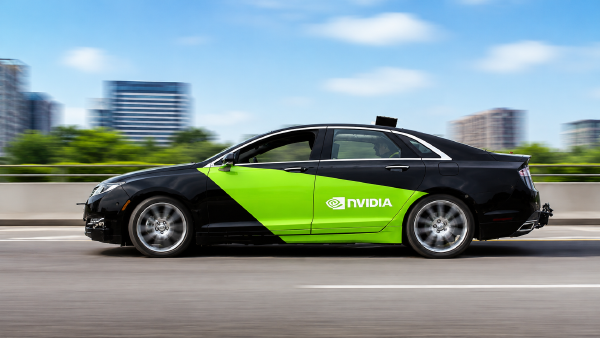
Autonomous driving remains another major pillar of NVIDIA’s AI ecosystem.
The company introduced:
Alpamayo 2 Super #
A 32-billion-parameter vision-language-action model designed for autonomous vehicles.
AlpaGym #
A reinforcement-learning framework that allows driving systems to learn from simulated experiences.
OmniDreams #
A scenario generation platform focused on creating rare edge cases that are difficult to collect in real-world driving data.
Together, these tools aim to accelerate development toward safer and more capable autonomous systems.
📈 One Architecture Across Every Industry #
The most important takeaway from NVIDIA’s latest announcements is not any individual product.
RTX Spark, Vera Rubin, OpenShell, Cosmos 3, DGX Station, and autonomous driving platforms all serve a larger purpose.
NVIDIA is building a unified AI architecture that spans:
- Data centers
- Enterprise infrastructure
- Personal computers
- Robotics
- Autonomous vehicles
In the past, NVIDIA sold graphics cards.
Today, it sells AI infrastructure.
Tomorrow, it hopes to provide the foundational architecture that powers every intelligent system—from cloud-scale AI factories to personal agents, robots, and autonomous machines.
RTX Spark may have generated the headlines, but it is merely the entry point into a much larger vision: a future where AI agents become the primary consumers of computing resources, and NVIDIA supplies the hardware, software, networking, and infrastructure that make that future possible.