Spirit v1.6 Overtakes Cosmos 3: The Real Battle in Physical AI Is Data
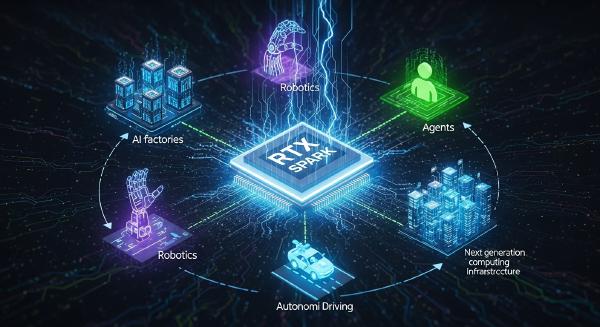
At COMPUTEX and GTC Taipei 2026, NVIDIA placed physical AI and embodied intelligence at the center of its long-term vision. A major highlight was the launch of Cosmos 3, which the company described as the world’s first fully open foundation model for physical AI, combining visual reasoning, world generation, and action planning capabilities.
During the keynote, NVIDIA CEO Jensen Huang emphasized that Cosmos 3 ranked among the strongest open physical AI models available.
However, just one day later, the RoboArena leaderboard delivered a surprise: Spirit v1.6, developed by Chinese embodied AI company Qianxun Intelligence, moved ahead of Cosmos 3 to claim the top position.
While leaderboard rankings alone never tell the full story, the result highlights a much larger industry trend. The future of embodied AI may depend less on model size and compute power and more on the ability to build large-scale, continuously improving real-world data pipelines.
🤖 Why RoboArena Matters #
One of the biggest challenges in robotics research is the gap between benchmark performance and real-world execution.
Many robotics models perform impressively in simulation environments or static evaluations. Yet when deployed on physical robots interacting with real objects in unpredictable environments, performance often deteriorates dramatically.
RoboArena was designed specifically to address this problem.
Often compared to the role that Chatbot Arena plays for large language models, RoboArena focuses on evaluating robotic policies through real-world execution rather than synthetic tests. The initiative was launched through collaboration among leading research organizations including UC Berkeley, Stanford, and NVIDIA, and its underlying research was selected as an Oral presentation at CoRL 2025.
Several characteristics distinguish RoboArena from traditional robotics benchmarks:
- Distributed evaluation across diverse environments
- Double-blind model comparisons
- Elo-style dynamic ranking systems
- Open participation from multiple organizations
Together, these mechanisms shift evaluation away from static benchmark scores and toward direct real-world competition.
For embodied AI companies, this makes RoboArena particularly significant because success requires consistent performance on actual robotic hardware rather than carefully curated demonstrations.
🚀 How Spirit v1.6 Moved Ahead #
The most compelling evidence comes not from leaderboard scores but from task execution itself.
Opening a Laptop #
At first glance, opening a laptop appears simple.
In practice, however, the robot must:
- Identify the laptop’s position and orientation.
- Determine an appropriate grasp point.
- Estimate required force.
- Coordinate multiple joints and end effectors.
- Execute the action without destabilizing the object.
Any failure along this chain can prevent successful completion.
According to public demonstration comparisons, Spirit v1.6 executed the task smoothly and efficiently, while competing systems struggled to achieve a reliable opening sequence.
Object Manipulation and Placement #
Another benchmark task involved placing a toy capybara into a plate.
Successfully completing the task requires:
- Object recognition
- Precise localization
- Stable grasping
- Motion planning
- Accurate placement
Spirit v1.6 successfully completed the full sequence despite minor adjustment movements during manipulation.
Competing models showed more difficulty identifying and interacting with the target object.
These examples illustrate an important point: embodied intelligence is ultimately measured by the complete chain of perception, reasoning, planning, and action.
A model that performs well in each isolated component but fails to connect them reliably will struggle in real-world deployment.
📊 Continuous Iteration, Not a One-Time Victory #
Spirit v1.6 did not emerge from nowhere.
Earlier versions had already demonstrated strong performance in independent evaluations.
For example, Spirit v1.5 previously led RoboChallenge rankings, outperforming several prominent competitors in multi-task robotic evaluations.
The relatively short development cycle between v1.5 and v1.6 suggests that Qianxun Intelligence has established an effective feedback loop:
- Collect real-world interaction data
- Identify failure cases
- Analyze execution breakdowns
- Retrain and optimize models
- Redeploy and gather new feedback
This process mirrors the continuous improvement cycles that have driven advances in large language models, but embodied AI introduces an additional layer of complexity: the physical world.
Unlike software-only systems, robots must contend with:
- Friction
- Occlusion
- Sensor noise
- Hardware limitations
- Unexpected environmental changes
As a result, engineering execution and data quality become just as important as model architecture.
📁 Real-World Data Is Becoming the Critical Resource #
Throughout GTC 2026, Jensen Huang repeatedly highlighted one challenge facing physical AI:
High-quality robotics data is extremely difficult to obtain.
The internet contains vast quantities of images and videos, but robots require something fundamentally different.
Robots need data that captures:
- First-person interactions
- Physical manipulation
- Contact dynamics
- Motion trajectories
- Success and failure outcomes
This explains why NVIDIA introduced Cosmos 3 alongside broader efforts involving simulation, synthetic data generation, teleoperation, and Omniverse-based world modeling.
The goal is to generate scalable training data without relying exclusively on expensive physical collection.
Qianxun Intelligence is pursuing a complementary strategy centered around real-world data acquisition.
According to public disclosures, the company has:
- Developed seven generations of wearable data collection hardware
- Built a distributed data collection network across more than 100 cities
- Established end-to-end pipelines for cleaning, labeling, validation, and deployment
- Set a goal of collecting millions of hours of real-world interaction data
This strategy effectively creates a layered data infrastructure.
Foundation Layer: Large-Scale Real-World Interactions #
Robots intended for homes, retail environments, warehouses, and factories must learn from real environments rather than idealized laboratory conditions.
Useful data sources include:
- Internet videos
- Wearable sensor systems
- Teleoperation sessions
- Autonomous robot deployments
Together, these sources expose models to the long-tail edge cases that define real-world performance.
Engineering Layer: Data Processing and Quality Control #
Raw data alone is insufficient.
Success depends on:
- Annotation quality
- Data filtering
- Failure analysis
- Continuous retraining
Interestingly, failure data often provides more learning value than successful demonstrations.
Understanding why a robot dropped an object or misjudged a grasp can produce more robust improvements than simply collecting additional examples of successful execution.
Capability Layer: Generalization #
Ultimately, the purpose of data collection is to improve real-world adaptability.
The more diverse and representative the training distribution becomes, the more likely a robot is to handle:
- New environments
- Unfamiliar objects
- Longer task chains
- Unexpected interruptions
This progression resembles the scaling laws observed in language models, where increasing data scale often leads to predictable gains in capability.
💰 Why Investors Are Paying Attention #
Technology is only one reason Qianxun Intelligence has attracted attention.
The company reportedly raised nearly RMB 5 billion across four financing rounds within three months, making it one of the most closely watched startups in embodied AI.
Investors appear to be focusing on the potential emergence of a self-reinforcing flywheel:
- Real-world deployments generate data.
- Data improves model performance.
- Better models enable broader deployment.
- Expanded deployment produces even more data.
If this cycle becomes sustainable, competitive advantages compound rapidly over time.
Importantly, commercialization is not treated as a separate phase occurring after technical development.
Instead, deployment itself becomes part of the learning process.
🏭 Commercial Deployments as Data Engines #
Qianxun Intelligence has pursued deployments across several industries.
Industrial Automation #
Partnerships involving manufacturing environments allow robots to learn from complex workflows where reliability and consistency are critical.
Retail and Service Applications #
Deployments in retail environments expose robots to customer interactions, dynamic environments, and long-duration operation requirements.
Advanced Manufacturing #
Battery production and other high-throughput industrial processes create opportunities to evaluate robotic performance under demanding operational conditions.
Each environment generates different forms of data and exposes different weaknesses.
As a result, commercialization serves not only as a revenue source but also as a mechanism for accelerating model improvement.
This creates a “commercialization triangle” consisting of:
- Real-world deployment
- Data generation
- Model iteration
Each component strengthens the others.
🔮 The Next Phase of Embodied AI #
The race in embodied intelligence is evolving beyond isolated model benchmarks.
Success increasingly depends on integrating multiple capabilities:
- Foundation models
- Data infrastructure
- Simulation systems
- Robotic hardware
- Engineering execution
- Commercial deployment
No single component can guarantee leadership on its own.
The rise of Spirit v1.6 illustrates this shift.
Whether or not any particular leaderboard position lasts, the broader lesson is becoming clear: embodied AI is entering an era where real-world data, rapid iteration, and deployment feedback loops may matter as much as raw model scale.
The future of physical AI will likely be determined not by the most impressive demo video or the largest model release, but by which organizations can continuously learn from reality itself.
As robots move from research labs into factories, stores, warehouses, and eventually homes, the companies that build the strongest real-world learning systems may ultimately define the next generation of intelligent machines.