Wafer Foundry Price Hikes: How AI Is Creating a Global Squeeze
The AI computing boom is no longer affecting only GPUs, CPUs, and AI accelerators. Its impact is propagating throughout the semiconductor manufacturing chain, tightening capacity and increasing costs across both advanced and mature process technologies.
Since the second half of 2025, wafer foundries have faced stronger AI-related demand, tighter production capacity, and rising manufacturing costs. By the second half of 2026, pricing pressure has expanded across the process spectrum, from leading-edge 3nm and 5nm technologies to mature 28nm, 40nm, 55nm, and specialty processes.
The underlying issue is increasingly structural rather than purely cyclical.
AI systems require enormous quantities of advanced compute silicon, but every AI accelerator also creates additional demand for power-management ICs, analog devices, interface chips, clocking components, memory-related devices, and other supporting semiconductors. Many of these components are manufactured on mature or specialty processes.
The result is a two-sided semiconductor capacity squeeze:
- Advanced nodes are constrained by AI compute demand.
- Mature and specialty nodes are constrained by the supporting infrastructure required to deploy AI systems.
- Rising equipment, material, energy, labor, logistics, and packaging costs are adding another layer of pricing pressure.
🚀 Advanced Nodes Enter Another Pricing Cycle #
Samsung Raises Advanced-Node Foundry Prices #
Samsung Electronics has reportedly increased wafer foundry prices for selected advanced processes as persistent AI demand puts additional pressure on available capacity.
Industry sources indicated that Samsung raised prices for chips manufactured on its 4nm SF4 process in July 2026. Orders from customers in mainland China and the United States reportedly increased by approximately 10% to 15% month over month, while customers in Taiwan, China, faced smaller increases of around 5% to 10%.
Samsung also reportedly increased 5nm wafer pricing by approximately 10% to 15%, while 8nm pricing rose by nearly 10%.
The regional differences reflect capacity allocation and customer mix. Strong demand from mainland Chinese customers is competing with U.S. customer requirements and Samsung’s own internal capacity needs.
When customers compete for incremental advanced-node capacity, the economic value of each available wafer slot increases. Foundries can therefore command higher prices without necessarily increasing nominal wafer output.
TSMC Prepares Broader Pricing Adjustments #
TSMC is also expected to raise foundry quotations in 2027 across both advanced and mature process technologies.
For processes at 7nm and below, base pricing is expected to increase by approximately 5% to 10%, depending on the process technology and customer relationship.
Customers requesting additional high-performance computing capacity beyond existing allocations could face another 10% to 15% premium. In some cases, the combined impact could push incremental order pricing toward approximately 25%.
The pricing pressure is not limited to leading-edge manufacturing.
Mature technologies, including 12nm, 16nm, and 28nm processes, along with older process generations, are also expected to see increases of up to approximately 10%, although actual adjustments will vary by node and customer.
TSMC’s Market Dominance Amplifies Capacity Pressure #
Counterpoint Research reported on August 27 that the global pure-play foundry market grew 29% year over year in Q2 2026.
TSMC remained the dominant supplier with approximately 73% market share, while Samsung ranked second with roughly 7%.
This concentration matters because customers that cannot secure sufficient capacity from the two largest advanced-node suppliers have relatively limited alternatives.
When leading-edge demand rises faster than available capacity, pricing power naturally shifts toward the foundries.
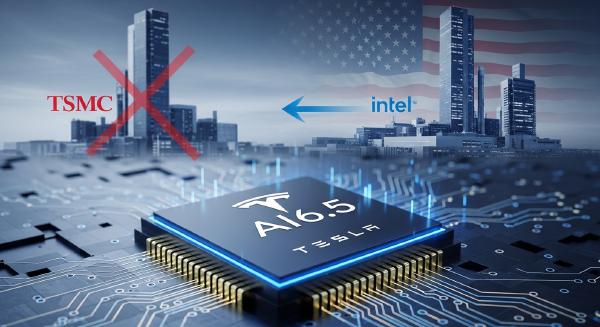
The resulting capacity overflow could create an opportunity for Intel Foundry.
Intel Foundry Emerges as an Alternative #
Intel Foundry has recently delivered several positive signals regarding its ability to compete for external manufacturing business.
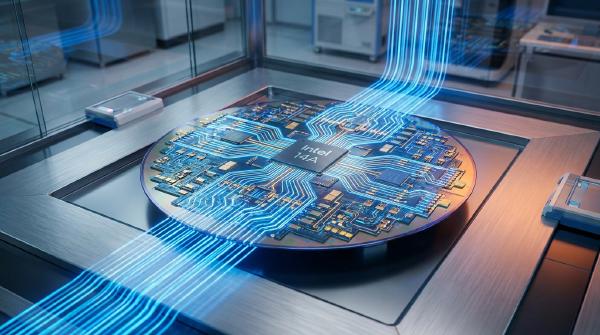
The company has secured reported design engagements involving its 18A and 14A process technologies while continuing to improve advanced packaging capabilities.
Its EMIB advanced-packaging yield has reportedly reached approximately 98%, while 18A process yield has reached around 85%.
Reported customers and design engagements include AMD, NVIDIA, Marvell, Microsoft, Micron, OpenAI, Apple, and Meta.
Intel’s opportunity is particularly important because customers increasingly want manufacturing redundancy. Even when TSMC remains the primary supplier, a qualified second source can reduce exposure to capacity shortages, geopolitical risk, and allocation uncertainty.
According to The Korea Herald, Intel Foundry could also secure manufacturing business for SK Hynix’s HBM4E memory base dies. SK Hynix is reportedly considering a dual-source strategy involving TSMC and Intel.
If confirmed, such diversification would further strengthen Intel’s position as customers seek additional advanced-node capacity and supply-chain flexibility.
📈 Mature Nodes Are Now Under Pressure #
Mature-Node Foundries Begin Raising Prices #
The pricing cycle is not confined to advanced-node foundries.
Since the first half of 2026, multiple mature-node manufacturers have announced or implemented wafer price adjustments.
Vanguard International Semiconductor (VIS) issued a pricing notice on March 13, citing increased manufacturing-capacity investments since 2025 and substantial increases in equipment, raw materials, energy, precious metals, labor, and transportation costs.
VIS planned to implement wafer foundry price adjustments beginning in April 2026.
UMC subsequently notified customers that wafer prices would be adjusted during the second half of 2026. The company cited rising costs for raw materials, energy, logistics, and critical semiconductor manufacturing equipment.
UMC’s broad customer base includes major IC design companies such as MediaTek, Intel, Qualcomm, Broadcom, Realtek, Novatek, and Texas Instruments, along with numerous smaller semiconductor companies.
Mainland Chinese foundries have also participated in the pricing cycle.
Nexchip announced on March 12 that it would increase wafer foundry prices by approximately 10% beginning June 1.
Powerchip Semiconductor Manufacturing Corp. (PSMC) has taken an even more aggressive position in selected categories. General Manager Zhu Xianguo stated during an earnings call that the company raised memory foundry quotations by approximately 45% beginning in July, with the associated revenue impact expected to become visible from November.
PSMC also increased 8-inch and 12-inch logic foundry prices by approximately 10% to 15%.
SMIC had already completed a process quotation increase in December 2025, putting it ahead of many other domestic foundries in the current pricing cycle.
Financial Results Reflect Stronger Foundry Economics #
Recent financial results from major mainland foundries further demonstrate the strength of semiconductor manufacturing demand.
SMIC reported Q2 2026 revenue of approximately $3.006 billion, marking the first quarter in which quarterly revenue exceeded $3 billion.
Revenue increased 36.1% year over year and 20% sequentially.
Gross profit reached approximately $761 million, up 69.1% year over year, while gross margin increased to 25.3%. Net profit increased 261.7% year over year.
Hua Hong Semiconductor reported Q2 revenue of approximately $717.5 million, representing 26.8% year-over-year growth. Gross margin was 16.5%, while net profit increased 385.9% year over year.
Capacity utilization reached approximately 102.8%.
These results indicate that foundries are benefiting from a combination of stronger demand, high utilization, and improved operating leverage.
Why Are Mature Nodes Becoming Expensive? #
The simultaneous tightening of advanced and mature nodes may initially appear counterintuitive.
If AI demand is primarily associated with cutting-edge GPUs, CPUs, and accelerators, why are 28nm, 40nm, 55nm, and specialty technologies also experiencing pricing pressure?
Three structural mechanisms help explain the trend:
- Capacity crowding and migration
- AI infrastructure component demand
- Limited substitutability of specialty processes
Capacity Crowding Creates a Downstream Supply Shock #
Leading foundries are prioritizing valuable advanced-node capacity for AI accelerators and other high-performance computing products.
As 5nm and 3nm capacity becomes increasingly occupied, products previously manufactured at leading foundries can migrate toward second- and third-tier suppliers.
This creates a crowding-out effect.
AI therefore does more than increase demand for advanced processes. It can indirectly transfer manufacturing demand into other foundries and process generations.
At the same time, foundries have generally been cautious about aggressively expanding mature-node capacity because returns on investment are lower and the risk of future oversupply remains significant.
The result is a structural supply-demand imbalance.
⚡ AI Accelerators Require Thousands of Supporting Components #
AI Infrastructure Creates Mature-Node Demand #
AI chips do not operate as isolated devices.
A high-performance AI server requires:
- Power-management ICs
- Voltage regulators
- Analog devices
- Interface chips
- Signal-conditioning components
- Memory and memory-interface devices
- Clocking components
- Connectivity chips
- Protection and monitoring devices
Many of these components do not require 3nm or 5nm manufacturing. Instead, they are commonly produced using mature and specialty processes.
This means that increasing AI accelerator deployments can create additional wafer demand far beyond the leading-edge logic wafers used by the accelerators themselves.
Power Management Becomes a Major Bottleneck #
SMIC Co-CEO Zhao Haijun cited an illustrative example in which a server rack containing 72 GPUs can require more than 16,000 components dedicated to power management.
The transition toward 48V high-voltage, high-current architectures is also generating additional demand for BCD and related analog technologies.
SMIC has benefited from incremental orders for 8-inch analog products, contributing to sequential revenue growth of approximately 40% across AI-support, PC and tablet, and industrial and automotive segments.
This highlights an important characteristic of AI-driven semiconductor demand:
Every additional AI accelerator can generate demand for dozens or even hundreds of supporting semiconductor devices.
AI demand therefore propagates backward through the manufacturing chain instead of stopping at leading-edge logic.
🧩 Specialty Processes Are Difficult to Replace #
BCD, RF SOI, and eNVM Have Limited Substitutability #
A significant portion of mature-node capacity is not interchangeable.
Technologies such as:
- BCD
- High-voltage CMOS
- RF SOI
- Embedded non-volatile memory (eNVM)
- Specialized analog processes
serve application-specific requirements that cannot simply be migrated to a standard CMOS logic process.
These technologies are widely used in automotive electronics, industrial control systems, power-management devices, communications equipment, and AI infrastructure.
They also share characteristics that make capacity difficult to expand:
- Narrow process windows
- Long qualification cycles
- Slow yield ramps
- High development costs
- Application-specific process integration
- Lengthy automotive and industrial qualification requirements
Constructing a new production line can take two to three years, while qualifying a new supplier can take considerably longer.
Once an automotive or industrial customer has qualified a particular process and production flow, switching foundries can be expensive. The transition may require product redesign, mask changes, reliability testing, and complete process requalification.
Consequently, when AI infrastructure suddenly increases demand for specialty devices, supply cannot respond quickly.
Pricing pressure therefore becomes difficult to avoid.
🔄 AI Is Creating a Two-Sided Capacity Squeeze #
The current mature-node pricing cycle is not simply a secondary effect of the advanced-node boom.
Instead, it reflects a deeper transmission mechanism throughout the semiconductor supply chain.
At one end, leading-edge capacity is being consumed by:
- GPUs
- CPUs
- AI ASICs
- Accelerators
- High-performance networking silicon
At the other end, mature and specialty processes are being consumed by:
- PMICs
- BCD devices
- Analog ICs
- Power discretes
- Interface chips
- Clocking components
- Automotive and industrial semiconductors
The result is a two-sided capacity squeeze.
Counterpoint expects global specialty foundry utilization to remain high during H2 2026 as foundry ASPs continue to rise, with AI demand remaining a major driver of market expansion.
💰 IC Design Companies Face Rising Costs #
Foundry Pricing Pressure Moves Downstream #
As wafer costs increase, the pressure inevitably reaches fabless semiconductor companies and integrated device manufacturers.
Price adjustments have therefore become increasingly common across the IC design industry.
STMicroelectronics, one of the world’s major MCU and power semiconductor suppliers, issued another price increase notice in August 2026 covering multiple product families beginning August 23.
This represented the company’s third price increase of the year, following adjustments implemented on April 26 and June 28.
Infineon issued a price adjustment notice in February, announcing higher prices for selected power switches and related semiconductor products beginning April 1.
NXP also notified partners of price adjustments covering selected product portfolios from April 1. Although detailed product-level increases were not disclosed, the company attributed the changes to significant cost increases throughout the supply chain.
Other semiconductor suppliers, including onsemi, Analog Devices, Vishay, and Alpha and Omega Semiconductor, have also participated in the pricing cycle.
Domestic Semiconductor Suppliers Follow the Trend #
Mainland Chinese semiconductor manufacturers have likewise announced price increases across multiple product categories.
Since the beginning of 2026, companies including CR Micro, Silan Microelectronics, NCE Power, JieJie Microelectronics, Macmic, Cmsemicon, NationalChip, Injoinic, Kiwi Instruments, SmartSens, and Halo Microelectronics have successively adjusted product prices.
Affected categories include:
- Analog ICs
- Power devices
- AIoT components
- Sensor-related semiconductors
- Other semiconductor products
Typical increases have ranged from approximately 10% to 20%, while certain products involving advanced packaging have reportedly seen increases exceeding 40%.
However, not every increase can be attributed directly to wafer foundry pricing.
Semiconductor manufacturers are simultaneously dealing with higher raw-material, energy, equipment, logistics, labor, packaging, and transportation costs.
These factors collectively increase the cost base across the semiconductor value chain.
📉 Why a Near-Term Price Decline Remains Unlikely #
The obvious question is whether foundry prices could decline during the second half of 2026 and provide relief to chip designers.
Zhao Haijun’s assessment is that a meaningful price reduction is unlikely within 2026.
The key issue is that AI is simultaneously increasing demand at both extremes of the semiconductor process spectrum.
At the leading edge, advanced computing products consume 5nm- and 3nm-class capacity.
At the mature end, AI infrastructure requires large quantities of analog, power, interface, and specialty semiconductor devices.
Processes such as 40nm and 28nm sit between these demand centers. Some products manufactured on these nodes do not directly benefit from the strongest AI-computing and data-center demand and may instead depend on capacity overflow from other process segments.
This creates an unusual market structure in which capacity at the two extremes can be heavily utilized while intermediate nodes experience very different demand conditions.
🏭 8-Inch Utilization Is Recovering #
TrendForce reported in May 2026 that TSMC and Samsung had reduced 8-inch wafer capacity beginning in H2 2025.
At the same time, average 8-inch capacity utilization among the world’s ten largest wafer foundries had recovered to nearly 90% in 2026.
Foundries have also been reallocating capacity away from display-driver ICs (DDIC) and CMOS image sensors (CIS) toward:
- Power-management ICs
- BCD
- Power discrete devices
- Analog products
- AI-support components
Customers seeking greater price and capacity stability have increasingly considered shifting tape-outs toward mainland Chinese foundries.
By late June, TrendForce had further projected that the current pricing cycle could extend into 2027.
🌐 The Semiconductor Supply Chain Is Entering a Structural Squeeze #
The current wafer foundry price cycle is fundamentally different from a conventional short-term supply shortage.
AI is increasing semiconductor manufacturing demand at multiple layers simultaneously.
At the advanced-node level, GPUs, CPUs, ASICs, and AI accelerators are consuming enormous quantities of leading-edge capacity.
At the mature-node level, power-management ICs, analog components, interface chips, and specialty devices are required to support those computing systems.
At the manufacturing level, foundries are also facing higher costs for semiconductor equipment, raw materials, energy, transportation, and labor.
The result is a supply chain in which both capacity and production costs are moving against chip designers.
The Current Supply-Demand Dynamics #
| Driver | Impact on Foundry Market |
|---|---|
| AI accelerator demand | Consumes leading-edge 3nm/5nm capacity |
| HPC capacity competition | Raises premiums for incremental advanced-node orders |
| Capacity migration | Pushes displaced products toward other foundries |
| AI power infrastructure | Increases demand for BCD, PMIC, and power devices |
| Specialty processes | Creates capacity that cannot easily be substituted |
| 8-inch capacity reductions | Tightens mature-node supply |
| Equipment and material costs | Raises foundry manufacturing costs |
| Automotive and industrial qualification | Makes supplier switching difficult |
| High foundry utilization | Reduces opportunities for price negotiation |
| Customer diversification | Drives additional demand toward alternative foundries |
What It Means for Semiconductor Designers #
The industry’s current dynamics point toward continued pricing pressure rather than an imminent return to a buyer’s market.
For semiconductor designers, the implications extend well beyond paying higher wafer prices.
Capacity reservation, multi-sourcing, process migration, advanced packaging, inventory planning, and long-term foundry agreements are becoming increasingly important components of semiconductor product strategy.
The ability to secure capacity can become almost as strategically important as the wafer price itself.
For products with long qualification cycles, particularly automotive, industrial, power, and infrastructure devices, supplier diversification must also be balanced against the engineering cost of moving between processes.
🔮 AI Demand Is Reshaping Foundry Economics #
The semiconductor industry’s current pricing environment is best understood as a structural interaction between AI demand, limited manufacturing capacity, process specialization, and rising production costs.
At the leading edge, GPUs, CPUs, ASICs, and AI accelerators are consuming enormous quantities of 3nm- and 5nm-class capacity.
At the mature end, the supporting infrastructure around those systems is creating additional demand for PMICs, analog devices, BCD, power discretes, interface chips, clocks, and other specialty components.
Meanwhile, foundries are dealing with higher equipment, materials, energy, labor, logistics, and packaging costs.
This combination creates a reinforcing cycle:
AI compute demand → advanced-node capacity pressure → manufacturing migration → mature-node demand → specialty-process constraints → higher semiconductor costs.
As long as AI infrastructure investment continues to expand, the pressure is unlikely to remain isolated to companies producing GPUs and AI accelerators.
It will continue propagating backward through wafer fabrication, specialty processes, packaging, memory, power management, analog devices, and ultimately the broader semiconductor supply chain.
The current foundry price increases should therefore be viewed not simply as a temporary reaction to AI demand, but as evidence of a broader structural imbalance between semiconductor capacity, process specialization, and the rapidly expanding requirements of AI computing.