Huawei Ascend 910D: Ambitious AI Chip Push Under US Controls
Huawei’s reported development of the Ascend 910D reflects the company’s broader effort to build a competitive AI computing platform under increasingly restrictive semiconductor export controls.
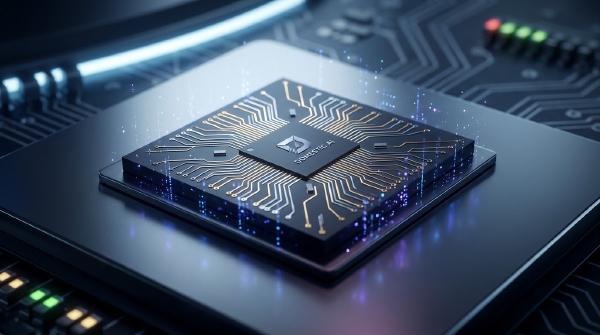
Positioned as a successor to the Ascend 910B and 910C, the Ascend 910D was reportedly designed to address the performance gap with Nvidia’s high-end data-center accelerators while relying heavily on China’s domestic semiconductor supply chain.
The reported specifications and launch plans surrounding the 910D originated largely from industry sources and were not fully confirmed by Huawei. Nevertheless, the project illustrates several of the central challenges facing China’s AI semiconductor industry: restricted access to advanced manufacturing, limited supply of high-end compute hardware, dependence on domestic production, and the difficulty of building an alternative software ecosystem to Nvidia CUDA.
🔒 AI Chip Development Under Export Controls #
Huawei’s Ascend strategy cannot be separated from the broader US-China semiconductor conflict.
After Huawei was placed on the US Entity List in 2019, the company faced increasing restrictions on access to advanced semiconductor technologies and manufacturing capabilities. US export controls subsequently expanded to cover high-performance AI accelerators and related technologies, limiting the ability of Chinese companies to obtain some of the most advanced AI computing hardware.
For Chinese AI developers, these restrictions created a significant supply challenge. Training and deploying large AI models requires enormous amounts of accelerator capacity, and Nvidia GPUs had historically played a dominant role in China’s data-center AI infrastructure.
Huawei responded by accelerating development of its own accelerator architecture and surrounding software stack.
The Ascend 910D therefore represents more than another chip generation. It is part of a broader attempt to establish an AI computing platform that can be designed, manufactured, integrated, and deployed with a substantially greater degree of domestic supply-chain control.
🧩 Ascend 910D Targets High-End AI Computing #
The reported objective of the Ascend 910D was ambitious: compete with established high-end accelerators such as Nvidia’s H100.
Industry reports suggested that initial engineering samples could be provided to selected customers during 2025, followed by potential mass production later in the year. However, these timelines and specifications were not officially confirmed and should be treated as reported development targets rather than established product specifications.
Some reports attributed several architectural improvements to the 910D, including an updated version of Huawei’s Da Vinci architecture, larger and faster high-bandwidth memory, advanced packaging, and improved chip-to-chip interconnect technology.
The reported design direction reflects a broader trend in AI accelerator development. Performance is no longer determined solely by the compute engine. Memory bandwidth, interconnect throughput, software efficiency, cooling, and cluster-level scaling are increasingly important for large-model workloads.
🔮 Architecture, Memory, and System-Level Optimization #
Reported specifications for the Ascend 910D have included aggressive targets for compute density and memory bandwidth.
Some industry reports claimed that Huawei was pursuing substantially higher AI compute performance than previous Ascend generations while incorporating advanced HBM configurations and high-speed interconnect technologies.
However, many of the specific figures circulated around the 910D have not been independently verified. Claims concerning peak compute performance, memory bandwidth, power efficiency, or direct comparisons with Nvidia’s H100 should therefore be treated cautiously.
The more important technical point is Huawei’s apparent focus on system-level optimization.
When access to the most advanced process nodes is constrained, chip designers can compensate to some extent through architecture, packaging, memory configuration, scheduling, and software optimization. These techniques cannot completely eliminate process-node disadvantages, but they can improve the practical performance of a complete accelerator system.
For AI workloads, this distinction is especially important because large-scale training and inference depend on clusters rather than isolated chips.
🏭 Domestic Manufacturing Is a Core Constraint #
Manufacturing remains one of the most difficult challenges for Huawei’s high-end AI accelerator strategy.
Industry reports have linked production of advanced Ascend processors to SMIC and domestic semiconductor manufacturing capabilities. Restrictions on access to leading-edge lithography equipment and other semiconductor technologies limit the process nodes available to Chinese chipmakers compared with the most advanced manufacturing platforms operated by companies such as TSMC.
A less advanced process node can affect transistor density, power efficiency, thermal characteristics, and the amount of compute that can be integrated into a given die area.
Huawei therefore has strong incentives to compensate through architectural efficiency and advanced packaging.
This also explains why domestic supply-chain development is strategically important. A competitive AI accelerator requires far more than an accelerator design. It depends on wafers, HBM, advanced packaging, substrates, power-management components, networking technology, manufacturing equipment, testing, and system integration.
Building more of these capabilities domestically can reduce exposure to external supply disruptions, although it does not eliminate the technical challenges associated with advanced semiconductor manufacturing.
💻 Software May Be as Important as Silicon #
Hardware performance alone is not enough to establish an AI accelerator ecosystem.
Nvidia’s CUDA platform has become one of the industry’s most significant competitive advantages because developers can access mature libraries, frameworks, compilers, debugging tools, optimization utilities, and extensive third-party software.
Huawei has been building an alternative stack around MindSpore and CANN (Compute Architecture for Neural Networks).
CANN provides software infrastructure for deploying AI workloads on Ascend hardware, while MindSpore serves as a machine-learning framework within Huawei’s broader ecosystem.
Compatibility with established frameworks such as PyTorch and TensorFlow is also important because enterprises do not want to rewrite entire AI applications simply to change accelerator hardware.
For Huawei, improving migration tools, operator support, libraries, development environments, and performance optimization is therefore essential. The larger the installed Ascend base becomes, the stronger the incentive for developers to optimize applications for the platform.
🌐 Building an Alternative AI Computing Ecosystem #
The strategic significance of Ascend extends beyond individual accelerator specifications.
The global AI computing market has become heavily concentrated around Nvidia’s hardware and CUDA software ecosystem. Huawei’s approach provides China with an alternative stack covering accelerator hardware, networking, software, and large-scale computing systems.
This could be particularly important for government organizations and enterprises that want to reduce dependence on foreign technology suppliers.
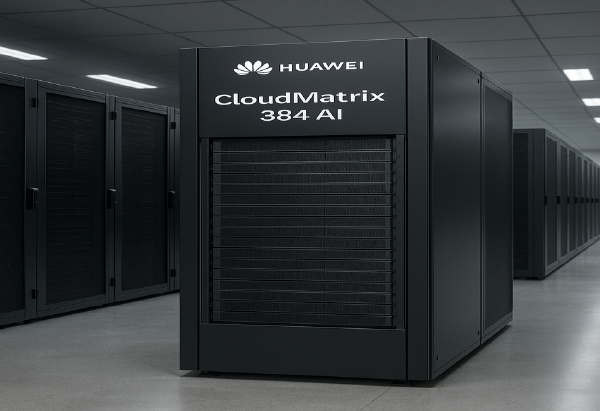
Huawei’s large-scale AI infrastructure initiatives are part of this effort. Systems built from multiple Ascend accelerators are designed to provide the computing and interconnect capabilities required for large-model training and inference.
The resulting ecosystem can create a reinforcing cycle: more hardware deployments encourage software optimization, while better software support makes additional hardware deployments easier.
That ecosystem effect may ultimately matter more than the performance of any individual Ascend processor.
⚔️ Nvidia’s Roadmap Raises the Bar #
Huawei is also competing against an industry that continues to evolve rapidly.
Nvidia has moved beyond the H100 generation with newer architectures and accelerator platforms, while its roadmap continues to target substantially higher performance for large-scale AI workloads.
This creates a difficult target for Huawei.
Even if an Ascend generation approaches the performance of an older Nvidia accelerator, Nvidia may already have introduced a faster generation by the time Huawei reaches volume production.
Consequently, Huawei needs sustained architectural improvements rather than a one-time performance breakthrough.
The competitive gap also extends beyond peak FLOPS. Memory capacity, bandwidth, networking, cluster scalability, software maturity, energy efficiency, and availability all influence the total cost and performance of an AI computing system.
🌏 Global Expansion Faces Additional Barriers #
China provides Huawei with a large domestic market in which to develop and scale Ascend. International expansion is considerably more complicated.
AI accelerator customers typically evaluate not only technical performance but also long-term software support, supply continuity, developer adoption, regulatory exposure, and compatibility with existing infrastructure.
Huawei faces additional geopolitical and supply-chain considerations in markets where US technology relationships are strategically important.
As a result, even a technically competitive Ascend accelerator may face significant barriers to becoming a broadly adopted global alternative to Nvidia or AMD.
Regions such as the Middle East, Southeast Asia, and Latin America could provide opportunities for Huawei to expand its AI infrastructure business, but establishing a global ecosystem would require sustained investment and widespread developer adoption.
⚠️ Capacity and Yield Could Determine Commercial Success #
Another critical issue is manufacturing scale.
Designing an advanced AI accelerator and producing it in meaningful commercial quantities are two different challenges. Advanced AI chips contain large dies, require high-bandwidth memory, and depend on sophisticated packaging. Yield losses can therefore have a substantial effect on the cost and availability of finished accelerators.
For Huawei, manufacturing constraints could become just as important as architectural performance.
If domestic production can scale reliably, Huawei can use China’s large AI market to establish a substantial installed base. If production remains constrained, however, strong demand could exceed available supply and limit the platform’s ability to compete with established accelerator suppliers.
The same principle applies to supporting components such as HBM, packaging capacity, networking hardware, and power infrastructure.
🔮 The Ascend 910D Is Part of a Larger Strategic Shift #
The significance of the Ascend 910D ultimately extends beyond one processor.
Huawei is attempting to build an alternative AI computing stack under conditions in which access to some of the industry’s most advanced semiconductor technologies is restricted. That requires progress across chip architecture, domestic manufacturing, advanced packaging, memory, networking, software, and large-scale system integration.
The approach also demonstrates the importance of scale. China’s domestic market is large enough to provide a substantial customer base even without immediate access to the global AI accelerator market.
That gives Huawei an environment in which it can iterate on hardware and software, accumulate deployment experience, and encourage developers to build around the Ascend platform.
Whether the Ascend 910D itself can match contemporary Nvidia accelerators remains a separate question, particularly because many of the reported specifications have not been independently verified.
What is clearer is the strategic direction: Huawei is pursuing greater control over the complete AI computing stack, from accelerator design and manufacturing to software frameworks and cluster architecture.
If that strategy succeeds, its impact will extend well beyond a single product generation. It could contribute to the emergence of a more fragmented global AI accelerator market in which multiple hardware and software ecosystems compete for large-scale AI workloads.