Cerebras Systems IPO: WSE-3 AI Chips, Valuation and Risks
Cerebras Systems has attracted attention for its unconventional approach to AI computing: instead of connecting large numbers of separate accelerator chips, it builds processors across an entire silicon wafer. Its Wafer Scale Engine (WSE) architecture is designed to reduce communication overhead and accelerate demanding AI workloads.
A supplied report describes a dramatic Nasdaq debut on May 14, 2026, with shares closing at $311.07 against an offer price of $185—a reported gain of approximately 68% and an implied market capitalization near $95 billion. These figures, along with the reported IPO ranking and financial results below, should be checked against official filings and market records before publication.
Beyond the headline valuation, Cerebras represents a broader shift in AI infrastructure economics. Specialized inference hardware, cloud delivery models, customer concentration, and competition with established GPU platforms will all influence whether its technology can sustain long-term commercial growth.
🖥️ 1. Wafer-Scale Architecture: Rethinking AI Compute #
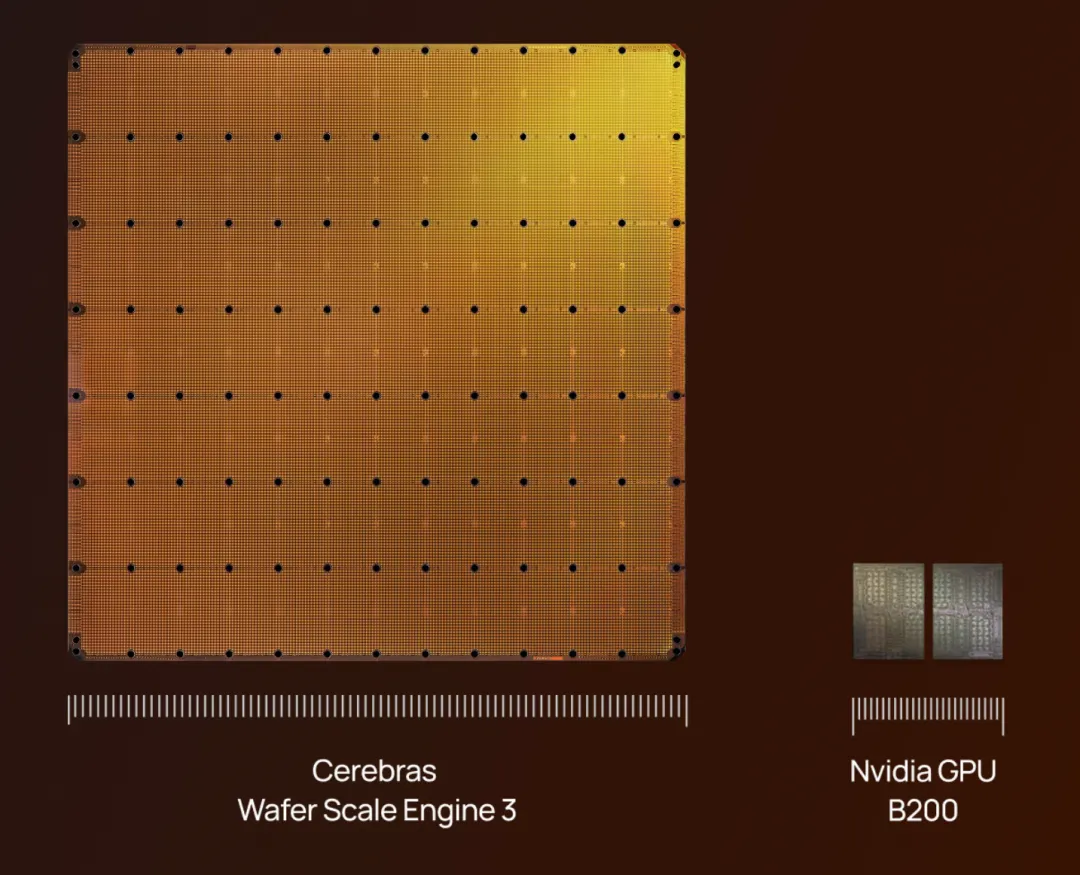
Traditional GPU accelerators place compute units on individual chips and connect multiple processors through high-speed interconnects. Cerebras takes a different approach with its Wafer Scale Engine 3 (WSE-3), integrating compute, memory, and communication resources across a much larger silicon area.
How wafer-scale computing works #
Large AI models require substantial compute throughput and frequent movement of data between processing units and memory. In conventional multi-accelerator systems, communication across chips can add latency, consume power, and complicate parallel execution.
Cerebras’ wafer-scale design places a very large number of compute elements on a single wafer, connected through an on-wafer communication fabric. This can reduce dependence on off-chip communication for supported workloads and provide substantial on-chip bandwidth.
| Feature | Conventional multi-GPU systems | Cerebras WSE-3 |
|---|---|---|
| Compute architecture | Multiple discrete accelerator chips | Compute integrated across a wafer |
| Communication | On-chip links plus inter-chip interconnects | Extensive on-wafer communication fabric |
| Scaling strategy | Add accelerators and distribute workloads | Use wafer-scale compute, with system-level scaling where needed |
| Potential advantage | Flexible ecosystem and broad workload support | Reduced communication overhead for suitable workloads |
| Main trade-off | Distributed-memory and communication complexity | Specialized architecture and software requirements |
The table describes architectural differences rather than a universal performance ranking. Actual throughput and latency depend on the model, batch size, sequence length, precision, software stack, and system configuration.
Why inference is a major target #
AI inference involves running a trained model to generate predictions, responses, or other outputs. For interactive applications, latency and throughput can be as important as peak compute performance.
Wafer-scale integration may benefit workloads that require frequent communication among model components. Cerebras has positioned its architecture for demanding AI inference and training tasks, including large language models.
However, claims that a system is tens of times faster than conventional GPUs should be treated as workload-specific unless the benchmark, hardware configuration, software versions, and measurement methodology are disclosed. There is no single performance multiplier that applies to every AI model.
Key takeaway: Cerebras’ differentiator is not simply a larger processor. It is an architectural attempt to reduce the communication costs that increasingly shape AI system performance.
☁️ 2. From AI Chips to Cloud Services #
Selling specialized hardware is only one way to monetize an AI accelerator. Cerebras can also deliver computing capacity through cloud services, allowing developers and enterprises to use its systems without purchasing and operating the underlying equipment.
This model can expand access to wafer-scale hardware while creating recurring usage-based revenue. It also places Cerebras in competition with a wider range of AI infrastructure providers, including hyperscalers and specialist GPU cloud companies.
Partnerships and distribution #
The supplied report highlights two major commercial developments:
- OpenAI partnership: The source describes a reported $20 billion cloud agreement extending through 2028. The agreement’s exact financial structure, duration, and committed capacity should be verified against primary disclosures.
- AWS integration: The source reports that Cerebras hardware became available through AWS data centers in March 2026. The precise deployment model, regional availability, and service terms require confirmation.
Partnership announcements can signal demand, but their commercial implications vary. A collaboration may involve committed purchases, reserved capacity, joint engineering, a distribution agreement, or a combination of these. Headline contract values should not automatically be treated as recognized revenue.
What the cloud strategy changes #
Cloud delivery can lower the barrier to trying a new accelerator architecture. Customers can test performance, compare inference economics, and scale usage without making a large capital investment.
For Cerebras, the model also introduces operational requirements:
- Capacity planning: Hardware must be available where customers need it.
- Utilization: Expensive systems need sufficient workloads to generate attractive returns.
- Service reliability: Production customers require predictable availability, monitoring, and support.
- Software compatibility: Developers need practical ways to deploy models, integrate existing tools, and migrate workloads.
- Unit economics: Revenue must cover hardware depreciation, facilities, networking, energy, and operating costs.
The central question is whether Cerebras can translate technical differentiation into sustained, profitable demand rather than relying on a small number of large agreements.
📈 3. Financial Performance and Customer Concentration #
The supplied figures describe a sharp increase in revenue between 2024 and 2025, alongside a transition from a substantial net loss to a modest profit. Because these numbers are not independently verified here, they should be presented as reported figures rather than established financial facts.
| Period | Reported revenue | Reported net income or loss |
|---|---|---|
| FY 2024 | $480 million | -$495 million |
| FY 2025 | $3.2 billion | $88 million |
If accurate and comparable across both periods, these figures would imply rapid revenue expansion and a significant improvement in profitability. They would also warrant close examination of revenue recognition, contract timing, operating expenses, and the sustainability of customer demand.
Revenue growth is not the whole story #
For an AI hardware and cloud company, investors should distinguish between several financial measures:
- Revenue growth: Indicates the pace of commercial expansion but does not establish that the business model is sustainable.
- Gross margin: Shows how much revenue remains after direct costs, including the cost of delivering cloud capacity where applicable.
- Operating income: Reflects expenses associated with research, development, sales, administration, and operations.
- Free cash flow: Helps reveal whether the business generates cash after capital expenditure.
- Backlog and remaining performance obligations: Can provide insight into contracted future business, subject to contract terms and cancellation risks.
A company can report accounting profits while still requiring significant cash investment to build data centers, purchase equipment, and support growth.
Customer concentration is a critical risk #
The source attributes the following revenue shares to two customers:
| Customer | Reported share of revenue |
|---|---|
| G42 | 46% |
| OpenAI | 40% |
| Combined | 86% |
These percentages require verification against the company’s official financial disclosures. If accurate, they would indicate substantial customer concentration.
A high concentration creates several risks:
- Contract renewal risk: A delayed renewal or reduced commitment could materially affect revenue.
- Negotiating pressure: Major customers may have greater leverage over pricing and service terms.
- Capital planning risk: Infrastructure investments may be difficult to redeploy if a large customer reduces demand.
- Geopolitical exposure: Cross-border technology rules, export controls, or regional policy changes could affect particular commercial relationships.
- Growth volatility: A small number of contract decisions can have an outsized impact on reported results.
Diversifying customers across enterprises, AI developers, cloud platforms, and industries could reduce these risks over time.
⚔️ 4. Competitive Landscape: Cerebras and NVIDIA #
Cerebras competes in a market where architectural innovation is only one part of the equation. Performance per dollar, energy efficiency, software compatibility, system availability, and developer familiarity all affect purchasing decisions.
NVIDIA benefits from a broad accelerator portfolio, mature software tooling, established networking technology, and a large developer ecosystem. Cerebras differentiates itself through wafer-scale integration and its focus on large-scale AI workloads.
Comparing the approaches #
| Dimension | NVIDIA GPU ecosystem | Cerebras wafer-scale approach |
|---|---|---|
| Hardware strategy | Discrete GPUs and interconnected systems | Large-scale wafer-integrated processor |
| Software ecosystem | Broad support through CUDA and associated libraries | More specialized software stack |
| Deployment options | Workstations, servers, clusters, and cloud platforms | Cerebras systems and supported service offerings |
| Potential strengths | Flexibility, ecosystem depth, and broad availability | Reduced communication overhead for suitable workloads |
| Key challenges | Scaling efficiency, system cost, and workload-specific bottlenecks | Ecosystem adoption, workload fit, and commercial scale |
Neither architecture is automatically superior across all workloads. A meaningful comparison should measure end-to-end latency, throughput, total cost per generated token, energy consumption, and operational complexity using equivalent model settings.
The inference market is broader than one competitor #
The competitive landscape includes GPU vendors, custom AI accelerators, inference-focused processors, and cloud providers developing their own silicon. Customers may also deploy different architectures for training, prefill, decoding, and other stages of an AI workload.
The supplied source claims NVIDIA acquired Groq for $20 billion in December 2025. That is a significant corporate transaction claim and should be verified against official announcements and regulatory filings before being stated as fact. Until confirmed, it should not be used as the foundation for conclusions about NVIDIA’s competitive strategy.
Cerebras’ longer-term position will depend on demonstrating repeatable advantages under real production conditions, building software compatibility, and expanding beyond a narrow customer base.
🧊 5. The 2026 AI IPO Market #
A high-profile AI infrastructure listing can influence investor expectations for other private technology companies. However, one successful debut does not establish that the IPO market has entered a sustained recovery.
The supplied source identifies several potential future listings:
- Databricks: A possible public offering, with timing and valuation dependent on market conditions and company decisions.
- CoreWeave: Further public-market activity would depend on its financial performance, capital needs, and investor demand.
- OpenAI: Any potential listing timeline remains speculative unless confirmed by the company or authoritative filings.
Valuation estimates and rumored listing dates should be clearly labeled as unconfirmed. Private-market valuations, proposed IPO valuations, and public-market capitalization are different measures and should not be compared without accounting for timing, share structure, dilution, and financial performance.
What investors should evaluate #
For AI infrastructure companies, a sustainable valuation depends on more than excitement about AI demand. Investors should examine:
- Revenue quality and the proportion derived from recurring contracts.
- Customer concentration and renewal terms.
- Gross margins and the cost of delivering compute.
- Capital expenditure requirements and equipment depreciation.
- Access to power, cooling, data-center capacity, and networking.
- Competition from established GPU platforms and custom silicon.
- Software ecosystem maturity and switching costs.
- Whether growth is supported by durable demand rather than a few unusually large agreements.
A strong debut can create momentum, but the company’s subsequent operating results determine whether that valuation is sustainable.
⚖️ Conclusion: Can Wafer-Scale Computing Build a Durable Business? #
Cerebras offers a distinct approach to AI computing. Its wafer-scale architecture targets communication bottlenecks that can limit large-model performance, while its cloud strategy gives customers a way to access specialized hardware without deploying it themselves.
The opportunity is significant, but the business case depends on several factors beyond chip design. Cerebras must demonstrate consistent performance advantages on representative workloads, convert partnerships into durable revenue, maintain attractive unit economics, and broaden its customer base.
The reported financial results and IPO valuation would make independent verification especially important. Investors should distinguish confirmed disclosures from projections, market rumors, and performance claims tied to specific benchmarks.
Ultimately, Cerebras is a test of whether a specialized AI architecture can compete not only on raw computing performance but also on software, availability, economics, and scale. The outcome will help illustrate how much room the AI infrastructure market has for alternatives to conventional GPU-centered systems.