Intelligent Computing Centers: Architecture, Technologies and AI
As artificial intelligence reshapes industries, the Intelligent Computing Center (ICC) is emerging as a critical foundation for large-scale digital transformation. Unlike conventional data centers designed primarily for general-purpose workloads, ICCs are engineered around the compute density, networking bandwidth, storage throughput, and operational requirements of modern AI.
An Intelligent Computing Center (ICC), also known as an AI Computing Center, is a specialized data center that combines high-performance servers, AI accelerators, high-speed storage, low-latency networking, and intelligent software platforms. Its primary workloads include large-scale model training, high-throughput inference, scientific computing, and massive-scale data processing.
The architecture of an ICC therefore extends beyond individual servers. It is a complete computing system in which accelerators, memory, storage, networking, software, power, cooling, and resource management must operate together efficiently.
🏗️ Core Components of an Intelligent Computing Center #
An ICC typically consists of four major layers: compute, networking and storage, software, and security and reliability.
1. High-Performance Computing Hardware #
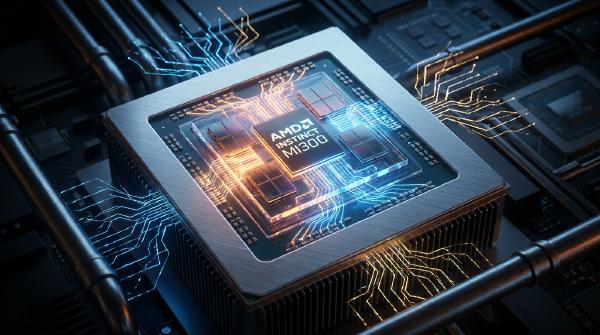
AI-optimized server clusters combine CPUs with accelerators such as GPUs, FPGAs, and application-specific ASICs. These systems provide the parallel processing capacity required by neural-network training and other highly parallel workloads.
High-speed storage is equally important. NVMe SSDs, distributed storage systems, and large memory pools provide the throughput required to continuously feed data to compute nodes. Slow storage can otherwise become a bottleneck even when accelerator capacity is abundant.
2. High-Speed Networking #
Distributed AI workloads require large amounts of data to move between compute nodes.
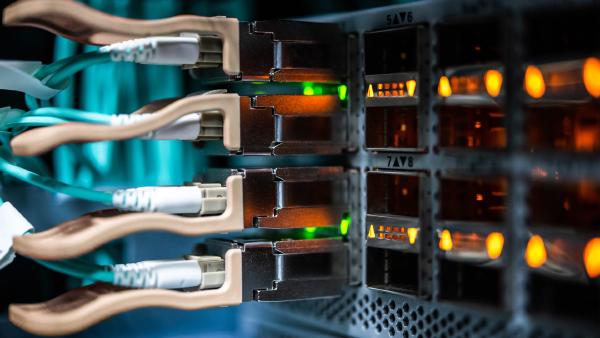
Low-latency interconnects such as InfiniBand, RDMA-enabled Ethernet, and other high-speed fabrics reduce communication overhead during distributed training and large-scale inference.
High-bandwidth external connectivity also allows ICCs to exchange datasets and services with cloud platforms, enterprise systems, remote storage, and edge computing nodes.
For large distributed models, networking is not simply an infrastructure layer. It directly influences cluster scalability and accelerator utilization.
3. Intelligent Software Stack #
The software layer coordinates the physical infrastructure and exposes it to AI developers and applications.
Common components include:
- AI frameworks: PyTorch, TensorFlow, JAX, and other machine-learning frameworks.
- Resource management: Kubernetes, Slurm, GPU schedulers, and virtualization technologies.
- Container platforms: Docker and Kubernetes provide portable application environments.
- Data management: Systems for data ingestion, preparation, governance, storage, and lifecycle management.
- Monitoring and orchestration: Tools that track compute utilization, network performance, thermal conditions, failures, and application health.
4. Security and Reliability #
Because ICCs may process valuable models, proprietary datasets, and sensitive enterprise information, security must cover both physical and digital infrastructure.
Typical measures include:
- Controlled physical access to server and network facilities.
- Network segmentation and protection against cyberattacks.
- Regular operating-system, firmware, and software patching.
- Encryption for data at rest and in transit.
- Identity and access management.
- Data governance and auditing.
- Hardware redundancy and automated failure recovery.
Reliability is particularly important for large training jobs because a failure in one part of a distributed cluster can interrupt thousands of accelerators.
⚙️ Key Technologies Powering Intelligent Computing Centers #
The ICC technology stack spans processors, accelerators, distributed software, networking, and infrastructure systems.
1. AI Accelerators and Compute Platforms #
Different accelerator architectures serve different workloads:
- GPUs: Highly parallel processors widely used for AI training, inference, and HPC.
- FPGAs: Reconfigurable devices suitable for specialized and latency-sensitive workloads.
- ASICs: Purpose-built silicon optimized for specific workloads and efficiency targets.
- Neuromorphic processors: Emerging architectures inspired by biological neural systems.
Modern AI servers commonly combine CPUs with accelerators and high-speed interconnect technologies such as PCIe and accelerator-specific fabrics.
The result is a heterogeneous computing environment in which different processors can be assigned to the workloads they execute most efficiently.
2. AI Models and Distributed Computing #
ICCs support increasingly diverse AI models, including:
- Large language models for natural-language processing and generation.
- Computer-vision models for image and video analysis.
- Multimodal models that process combinations of text, images, audio, video, and sensor data.
Training these models often requires distributing workloads across many accelerators and servers. Distributed training frameworks coordinate computation, synchronization, memory usage, and communication between nodes.
3. HPC and Cluster Technologies #
AI and traditional high-performance computing increasingly share similar infrastructure requirements.
High-performance clusters rely on high-bandwidth, low-latency fabrics to exchange data efficiently between compute nodes. Containerization and orchestration systems improve deployment flexibility, while software-defined networking can simplify traffic management across large environments.
Edge computing complements centralized ICC infrastructure by moving selected workloads closer to users or data sources. This is particularly useful when applications require low response times or when transmitting raw data to a centralized facility would be inefficient.
🚀 Why Intelligent Computing Centers Matter #
The importance of ICCs comes from their ability to turn large-scale computing resources into a coordinated platform for AI development and deployment.
Accelerating AI Training #
AI training can involve enormous datasets and billions or trillions of model parameters. Distributed ICC infrastructure allows computation to be spread across large accelerator clusters.
Higher compute density and faster interconnects can reduce training time, allowing research teams to iterate through experiments more quickly and shorten the path from model development to deployment.
Powering Large-Scale AI Inference #
Training is only one part of the AI lifecycle. Once a model is deployed, ICCs can provide the infrastructure needed to serve large numbers of inference requests.
This is important for:
- Recommendation systems.
- Enterprise AI assistants.
- Search and ranking systems.
- Real-time analytics.
- Logistics optimization.
- Computer-vision services.
- Generative AI applications.
The infrastructure must balance latency, throughput, accelerator utilization, and operational cost.
Enabling AI-Driven Industries #
ICCs support AI applications across a broad range of industries.
| Industry | Representative AI Workloads |
|---|---|
| Healthcare | Medical imaging, diagnostics, clinical decision support |
| Transportation | Autonomous systems, traffic optimization, logistics |
| Finance | Fraud detection, risk analysis, market analytics |
| Manufacturing | Predictive maintenance, quality inspection, digital twins |
| Public Sector | Smart-city analytics, infrastructure monitoring, public services |
The same underlying computing infrastructure can therefore support very different applications depending on the models, datasets, and orchestration systems deployed on top of it.
🌐 Global Trends Shaping ICC Development #
Several infrastructure trends are changing how intelligent computing centers are designed.
Rising AI Compute Demand #
The rapid adoption of large language models, generative AI, and multimodal systems is increasing demand for accelerator capacity. Organizations increasingly need infrastructure capable of supporting both model development and production inference.
Heterogeneous Computing #
Instead of relying exclusively on CPUs or a single accelerator architecture, modern ICCs increasingly combine CPUs, GPUs, custom AI accelerators, FPGAs, and specialized processors.
This heterogeneous approach allows infrastructure operators to match hardware resources to specific workloads.
High-Density and Liquid-Cooled Systems #
Modern AI accelerators can generate substantially more heat than conventional server processors. As rack power density increases, traditional air cooling becomes more challenging.
Liquid cooling provides a path toward handling higher thermal loads while enabling denser computing deployments and improved facility-level efficiency.
Hybrid Cloud and Edge Integration #
ICCs increasingly operate as part of a broader computing architecture rather than as isolated facilities.
Centralized infrastructure can handle large-scale training and batch processing, while cloud and edge resources can provide additional capacity or lower-latency processing closer to users and data sources.
Sustainability and Energy Efficiency #
The growing power requirements of AI make energy efficiency a major infrastructure consideration.
Operators are therefore focusing on:
- More efficient accelerators.
- Higher server utilization.
- Improved power distribution.
- Advanced cooling systems.
- Renewable energy integration.
- Better workload scheduling.
- Lower data-movement overhead.
The objective is not simply to increase raw computing capacity, but to deliver more useful computation per unit of energy and infrastructure cost.
⚠️ Challenges Facing Intelligent Computing Centers #
Despite their advantages, ICCs introduce significant engineering and operational challenges.
Power and Cooling #
AI clusters can require substantially more power per rack than traditional enterprise infrastructure. Expanding compute capacity therefore requires corresponding investments in power delivery, cooling, and facility infrastructure.
Infrastructure Utilization #
Accelerators are expensive resources, and low utilization can significantly increase the effective cost of AI workloads. Intelligent scheduling, workload consolidation, and resource sharing are essential for maximizing cluster efficiency.
Networking Bottlenecks #
As accelerator performance increases, interconnect bandwidth must scale accordingly. Insufficient network capacity can leave expensive accelerators waiting for data or synchronization.
Data Security and Governance #
AI systems often process sensitive enterprise, personal, or proprietary data. ICC operators must therefore maintain strict controls over data access, encryption, identity, auditing, and regulatory compliance.
Operational Complexity #
Large AI clusters combine hardware from multiple vendors with complex software stacks, distributed storage, high-speed networking, cooling systems, and orchestration platforms. Monitoring and troubleshooting these environments requires expertise across multiple infrastructure domains.
🔍 ICC vs. Traditional Data Centers #
Although an ICC is still a type of data center, its design priorities are significantly different.
| Characteristic | Traditional Data Center | Intelligent Computing Center |
|---|---|---|
| Primary workload | Enterprise and general-purpose computing | AI, HPC, and large-scale data processing |
| Compute | CPU-centric | CPU + GPU/accelerator-centric |
| Networking | General-purpose Ethernet | High-bandwidth, low-latency fabrics |
| Storage | Enterprise storage | High-throughput NVMe and distributed storage |
| Rack density | Moderate to high | Often very high |
| Cooling | Primarily air cooling | Air and increasingly liquid cooling |
| Scheduling | VM/container focused | GPU and accelerator-aware scheduling |
| Optimization | Application and server efficiency | End-to-end compute, network, and data efficiency |
The distinction is not absolute. Many modern facilities combine conventional enterprise workloads with AI infrastructure, creating hybrid environments that incorporate characteristics of both architectures.
🧩 The ICC as an End-to-End Computing System #
The most important characteristic of an Intelligent Computing Center is that its components cannot be evaluated independently.
A faster GPU does not automatically produce a faster AI cluster if the network cannot move data quickly enough. Likewise, adding accelerators without sufficient storage throughput, power capacity, or cooling can create new bottlenecks elsewhere in the system.
A practical ICC architecture therefore requires coordinated optimization across:
Compute → Memory → Storage → Network → Software → Power → Cooling → Operations
This systems-level approach is what separates an AI-ready computing facility from a conventional collection of high-performance servers.
🚀 Conclusion #
Intelligent Computing Centers are becoming a core component of the global AI infrastructure ecosystem. By combining accelerator-rich computing, high-speed storage, low-latency networking, distributed software, and high-density facility infrastructure, ICCs provide the foundation required for modern AI training, inference, and data-intensive workloads.
As AI models continue to grow and workloads become more distributed, the future of ICC design will depend increasingly on heterogeneous computing, advanced interconnects, liquid cooling, intelligent scheduling, efficient data movement, and sustainable power infrastructure.
The next generation of intelligent computing will therefore not be defined by processor performance alone. It will depend on how efficiently the entire data center operates as a single, coordinated computing system.